

Paver patios, walkways and driveways in Westchester County
A patio that heaves, holds water or pitches back toward the house did not fail at the surface. It failed underneath. We build the base and the fall first and then set the stone, and Nelson Bautista walks the job and is on site while it is built.
Family-owned and operated
Written scope and price
Our own crew
Set by our own crew
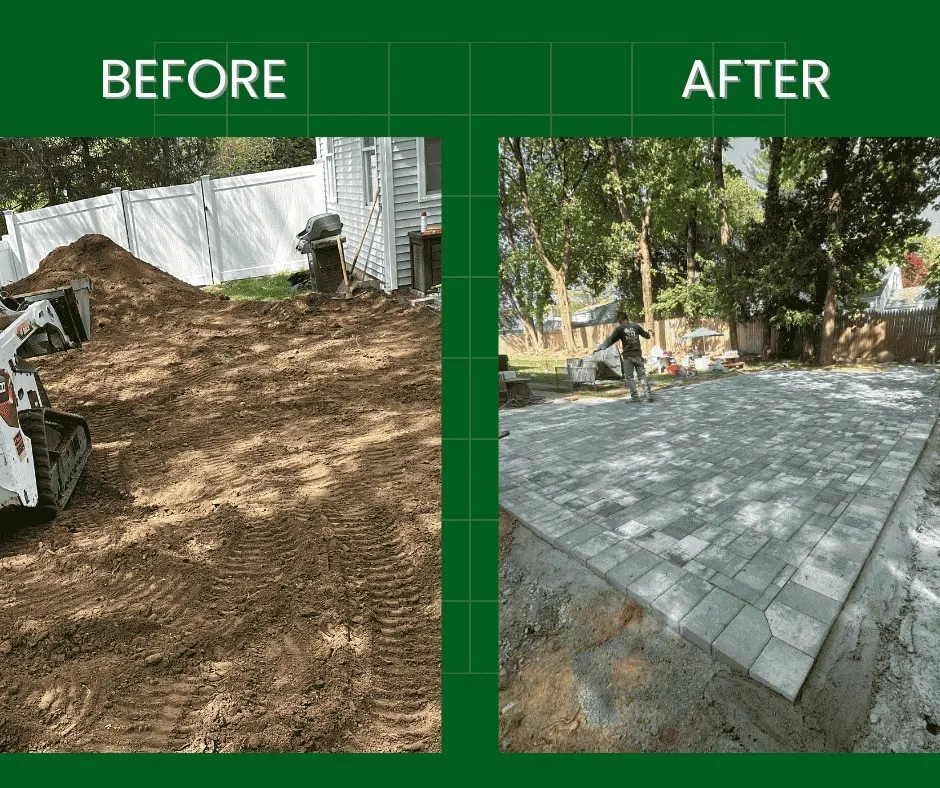
The crew in the photograph is Baudi's. Nothing on a Baudi job is subcontracted out, which is why the person who priced the work is the person standing on it while the base goes in.
That matters most at the stage shown here, before there is anything to look at. Once the stone is down, a patio built on four inches of base and one built on nine looks identical. The difference shows up in the third winter.
What we install:
- Patios, from a square off the back door to multi-level terraces with built-in steps
- Front and side walkways, including the run from the driveway to the front stoop
- Driveways and driveway aprons, on a deeper base than any patio gets
- Pool surrounds and coping, pitched away from the water
- Steps and stoops, paver-faced or with full natural stone treads
- Seat walls, low border walls and the fire pit that usually comes with them
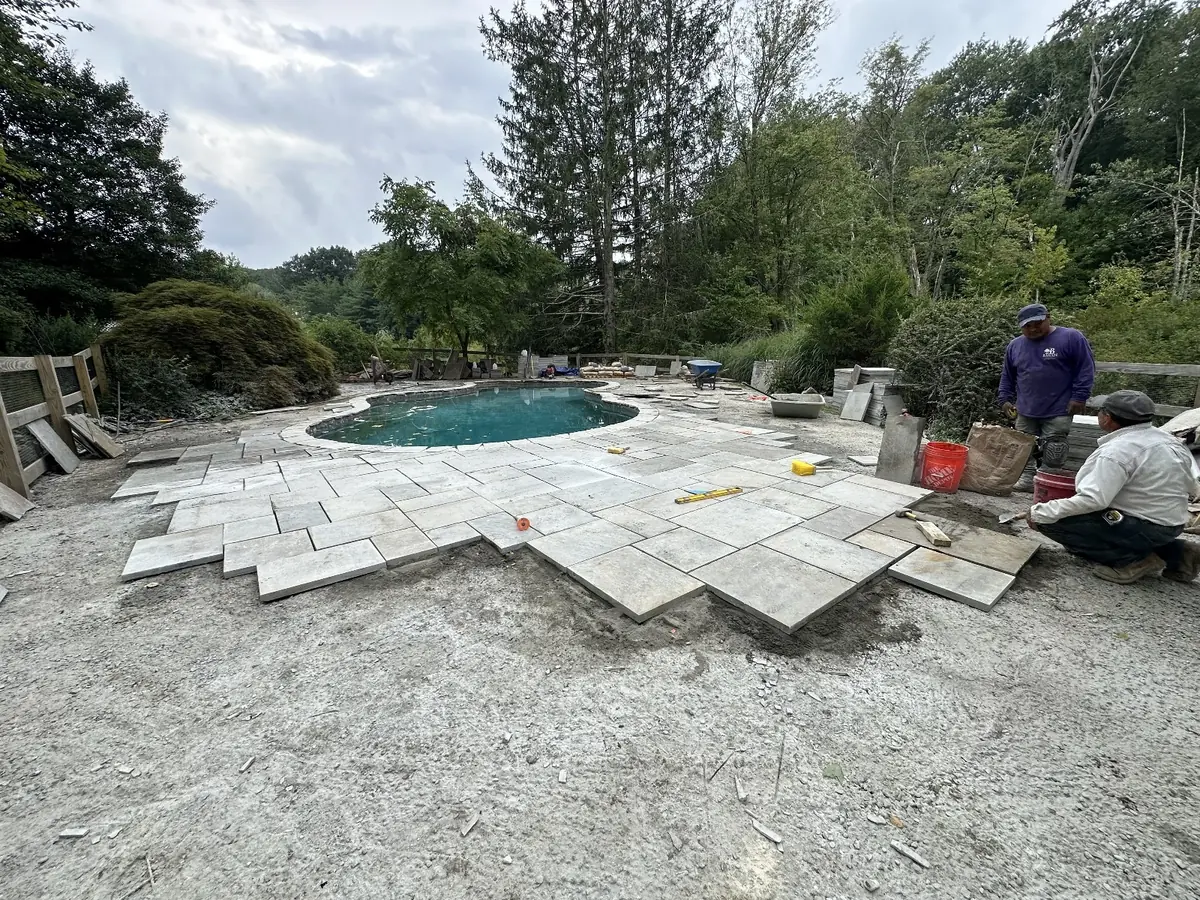
What actually goes under a paver patio?
Nearly every failed patio in this county failed below the surface. The build-up does not change because a job is small.
A paver surface is a field of individual units on a compacted base, not one poured slab. That is why it suits this climate. Units can shift with the ground and be reset. A slab cracks in a line and stays cracked.
The build-up:
- Excavation. Topsoil and soft organic material comes out until we reach stable subgrade, generally 7 to 9 inches below finished grade on a patio.
- Subgrade compaction before a single stone goes in. Soft spots get dug out, not bridged over.
- Crushed-stone base in lifts of a few inches, each lift compacted before the next. A base compacted in one pass stays loose in the bottom half.
- Geotextile fabric over clay or silt subgrade, so base stone does not migrate down into the soil.
- Bedding layer. About an inch of coarse concrete sand, screeded flat and left uncompacted. It is a setting bed, not base.
- Laying. Units set by hand in running bond, herringbone, basketweave or ashlar, perimeter cuts last.
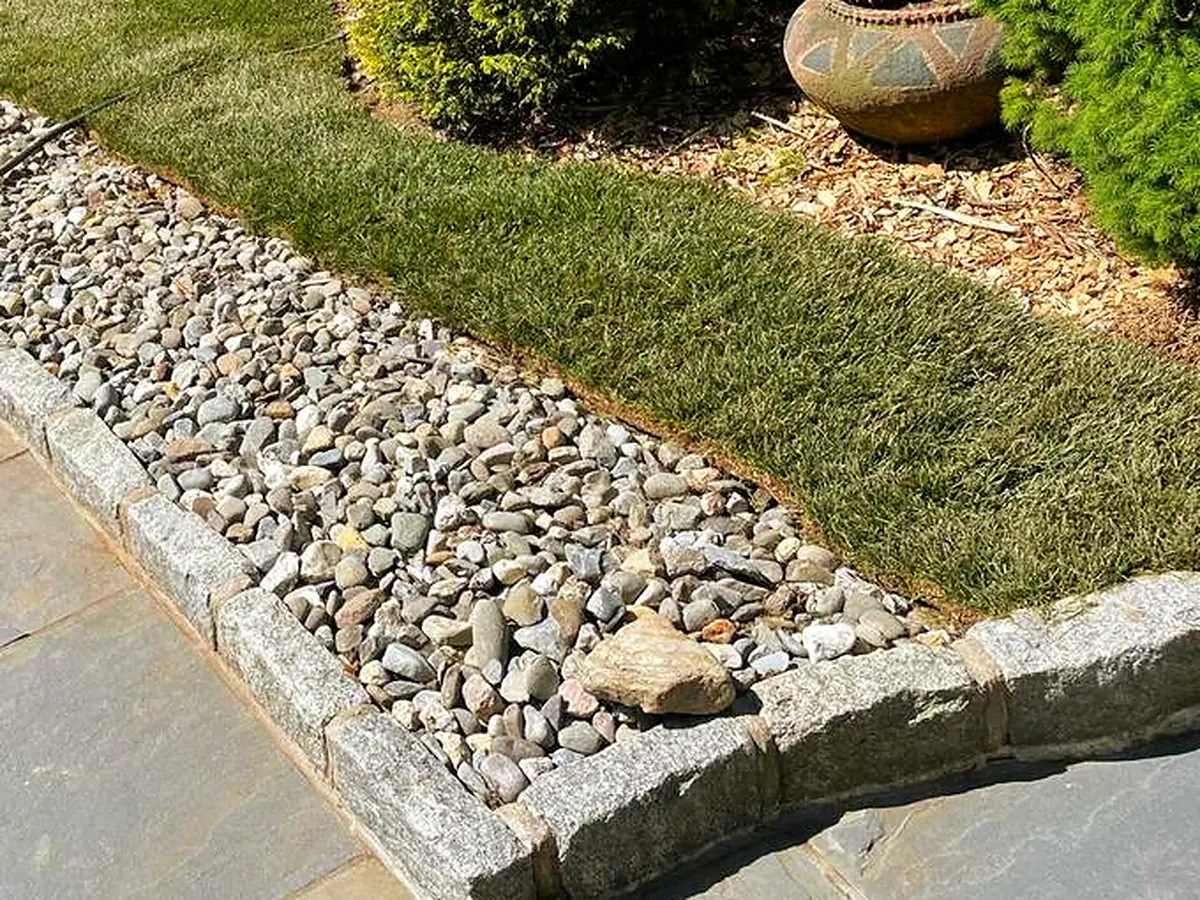
- Edge restraint all the way around, spiked edging, a concrete haunch or Belgian block. Skip it and the outside course walks outward until the field unravels.
- Polymeric sand swept into the joints, compacted in over a protective pad, then watered so it sets and locks the units together.
- Sealing, optional, and only after a season outside so efflorescence has weathered off.
Freeze-thaw is why base depth and pitch decide the outcome
The ground here freezes. Frost depth across northern Westchester and Putnam runs down around 42 to 48 inches, and between November and March the soil goes through dozens of freeze and thaw cycles, not one long freeze.
Water is the mechanism, not cold. Water trapped in the base expands when it freezes and lifts what sits on top of it. The surface drops back unevenly on the thaw. Repeat that forty times a winter and you get the heaved, rolling patio behind a lot of older houses around here.
A good base does not stop the frost. It removes the water. Clean crushed stone compacted in lifts drains, and a surface pitched at roughly a quarter inch of fall per foot sheds water before it soaks into the joints. That pitch runs away from the house, never toward the foundation.
Where the yard does not cooperate we handle it during the build: a French drain along the uphill side, a catch basin at a low corner, regrading past the patio edge, a dry well for downspouts that would otherwise discharge under the new surface. Drainage is what most estimates leave out and what the homeowner finds out about in the second spring. If water is the whole problem rather than the patio, that is its own job and we treat it as one.
Driveways and aprons take more base than a patio
A patio carries people and a table. A driveway carries a few thousand pounds of vehicle on four small contact patches, in the same wheel tracks, plus what the oil truck and the plow put on it in January.
So the numbers change. A residential paver driveway gets excavated for roughly 12 inches or more of compacted base, deeper where the subgrade is soft. We lay driveways in herringbone because the interlock resists the turning and braking loads that push a running bond apart, and edge restraint becomes a concrete haunch or Belgian block curbing instead of plastic edging. The apron between the road and your property line takes plow blades and road salt on top of that, so it gets built heavier still.
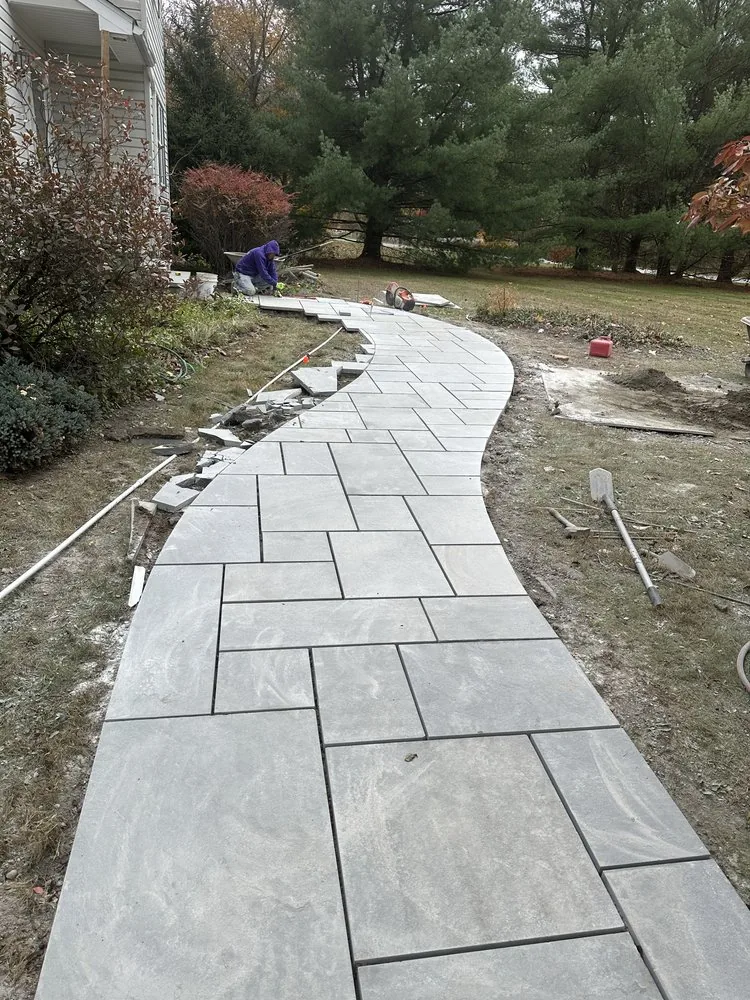
Recent work
How the estimate works
- 1Tell us what you need
- 2Walk the property with Nelson
- 3Receive a written scope and price
- 4Schedule the work
Common questions
Not here? Call (914) 486-3682. Someone answers seven days a week.
Honest patio pricing in Westchester starts under the surface, which is why we do not quote by the square foot over the phone. The number moves on how much excavation the ground needs, whether drainage has to be built before the surface goes down, how material and machines reach the work area, and the unit you choose, from concrete pavers to full-thickness natural bluestone. A tight back yard that needs everything wheelbarrowed prices differently than an open lot with machine access, even at the same size. Steps, edging, lighting sleeves and seat walls each add scope you will see itemized rather than buried. Nelson measures on site and leaves a written scope and price, usually the same visit. The estimate is free, and the walkthrough takes about twenty minutes.
Most residential patios run three days to a week and a half on site, and the spread is almost entirely about excavation and access, not the stone. Day one is usually demolition and digging: out past topsoil, down to ground that will not compress. The middle days are base work, crushed stone compacted in lifts, which is slow on purpose because it is the part that decides whether the patio is still flat in ten years. Setting the surface goes quickly by comparison, and the perimeter cuts come last. A small walkway can finish in two or three days; a large patio with drainage work, steps or a seat wall runs longer. Nelson gives you a start date and a duration with the written price, and the crew stays on the job until it is done.
Usually repaired, and we will tell you which case you are in before you commit to anything. Heave means water is sitting in the base, so the fix is to lift the affected area, correct the base and the fall, and relay the same units. That is a section of patio, not the whole thing, unless the original base was never built or the whole surface pitches at the house. Full replacement gets recommended when rebuilding piecemeal would cost more than doing it once, properly.
Related work we do
Most properties need more than one of these. One call covers all of them.
What clients say
I’ve used Baudi Landscaping for lawn care, masonry, landscaping and snow removal and do not have a single negative to report. Highly recommend Nelson and his team!!
Always taking good care of everything and doing the best job. Always attentive and answers all my questions. I highly recommend them.
Free on-site estimate
Twenty minutes on site, a written price.
Send a few details and we will come out, measure, and leave you with a written price. No fee, no sales visit, no pressure to sign anything that day.
Prefer to talk? Call (914) 486-3682 or text a photo of the area. Open seven days, 7 AM to 7 PM.
- Phone
- (914) 486-3682
- Hours
- Monday to Sunday, 7 AM to 7 PM
Request received.
Nelson or someone on the crew will call you within 24 hours to set up the walkthrough. If it is urgent, call (914) 486-3682 and you will get a person.