

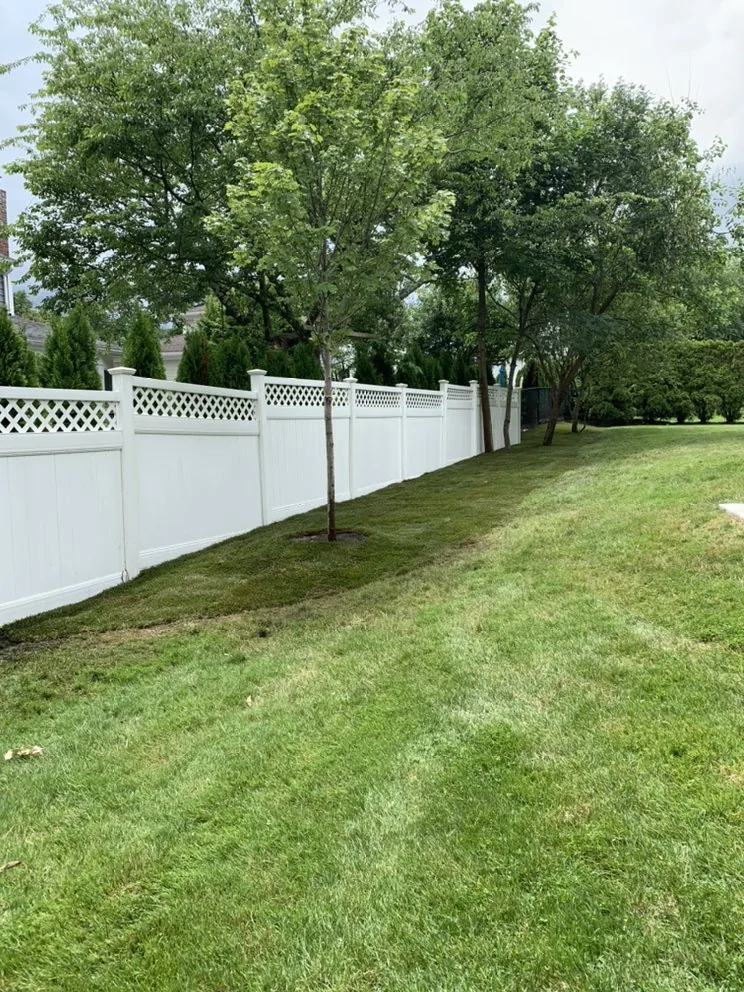
Fence Installation and Repair in Westchester County, NY
Cedar, vinyl, post-and-rail, privacy, chain link and gates, installed by Baudi's own crew out of Mount Kisco. The posts go below the frost line, because that is what decides whether the line is still straight in five years.
The posts are the whole job
A fence does not fail in the middle of a panel. It fails at the posts. Almost every crooked fence line in this county started as a post hole that was not deep enough, and the ground did the rest.
Groundwater freezes and expands through the winter, then releases in spring, and the cycle repeats all season. A post set shallow sits inside that moving layer and gets lifted a little each year. Two winters later there is a wave in the line and the gate will not latch. A post footed below the frost line sits in ground that does not move.
This is the same freeze-thaw reality that governs our masonry work, and we dig fence holes the way we dig wall footings. Past frost depth, belled at the bottom so the footing cannot pull straight up, crushed stone underneath so the post is not standing in water. Corners, ends and gate posts carry the most load and get the most attention.
Wood, vinyl, post-and-rail, chain link
Material comes down to what you want the fence to do and how much upkeep you are willing to give it. We walk the property first and tell you which one suits the run, the grade and the house.
What we install:
- Cedar and other wood. Weathers to a soft gray if you leave it alone, takes stain if you want the color. Board-on-board and stockade both work for privacy.
- Vinyl and PVC. Nothing to stain or seal, and unforgiving of a crooked line, so the pressure lands back on the post work.
- Post-and-rail. Two-rail and three-rail split rail suits the open properties around Bedford, Katonah and North Salem. Welded wire on the back side holds a dog.
- Privacy fence. Solid panel runs where you want the road or a neighbor's driveway gone. Height is the detail most likely to run into a town rule.
- Chain link. Still right for a dog run, a pool perimeter or a back line. Black vinyl-coated chain link nearly disappears against woods.
- Deer fencing. A four-foot fence is a polite suggestion to a deer. Tall mesh on braced posts, tight to the ground, is what keeps them off a garden.
Gates and slopes are where fences get judged
Most fences that fail in daily use fail at the gate. It is the only moving part, and it hangs on a post that takes a shock load every time somebody pushes through. Undersized gate posts, hinges too light for the leaf, or a post set at line-post depth all end the same way: the gate sags, the latch stops lining up, the bottom corner drags. We size gate posts up, set them deeper, and use hardware rated for the weight of the leaf rather than whatever came bundled with the panels.
Slopes are the other tell. You either rack the panels, letting the rails follow the ground while the pickets stay plumb, or step them down in level sections and accept a triangle of gap under each. Racking suits a steady grade, stepping suits a sharp drop. We string the run and set grade stakes first, so you see it before a post goes in.
Property lines, markouts and town rules
Property lines come first. A fence on the wrong side of one turns into an expensive conversation with a neighbor and occasionally a legal one. If you have a survey, we build off it. If the line is unclear, get one rather than guess from a hedge or an old stone wall that may never have sat on the line.
Utility markouts come next. Post holes go three feet down and deeper, into ground that may carry gas, electric, water or cable. The markout gets called in and we wait the required period before digging. That is a hard rule, not a courtesy.
Town and homeowners association rules are the last piece. Height, which side the finished face points, setbacks and pool enclosure requirements vary from town to town in Westchester, and some associations restrict style and material as well. Call your building department before material is ordered. We would rather spend ten minutes telling you what to ask than take a finished fence back down.
How the estimate works
- 1Tell us what you need
- 2Walk the property with Nelson
- 3Receive a written scope and price
- 4Schedule the work
Common questions
Not here? Call (914) 486-3682. Someone answers seven days a week.
It moves with the length of the run, the material and height, how many gates, and what the ground is like. Rock, roots, slope and tight access add labor to every hole, and tearing out an old fence is its own line. Nelson measures, walks the grade with you and writes a scope, usually within 24 hours of the call. The estimate is free.
Below the frost line, deeper than a lot of quick installs bother with around here. The footing has to sit in soil that does not move when groundwater freezes and thaws. Corner, end and gate posts go deeper still.
If you have one and the line is clear, we build off it. If the line is uncertain, get one first. Moving a finished fence costs far more than knowing where the line is beforehand.
Related work we do
Most properties need more than one of these. One call covers all of them.
What clients say
Baudi Landscaping consistently does an awesome job for us! They are very reliable and efficient. Nelson is great to work with.
I’m very pleased with the lawn care services provided by Baudi Landscaping. They have been consistently reliable, showing up on schedule each week for mowing and yard maintenance.
Twenty minutes on site, a written price.
Send a few details and we will come out, measure, and leave you with a written price. No fee, no sales visit, no pressure to sign anything that day.
Prefer to talk? Call (914) 486-3682 or text a photo of the area. Open seven days, 7 AM to 7 PM.
- Phone
- (914) 486-3682
- Hours
- Monday to Sunday, 7 AM to 7 PM
Request received.
Nelson or someone on the crew will call you within 24 hours to set up the walkthrough. If it is urgent, call (914) 486-3682 and you will get a person.