

Masonry or pavers: what actually matters for a Westchester patio
The internet frames this as a product choice. It is really a construction choice: rigid work set in mortar on concrete, or flexible work dry-set on compacted stone. We build both, so this guide has no side to sell.
By Nelson Bautista, Baudi Landscaping · Updated
At a glance
- The real choice is rigid (mortared on concrete) versus flexible (dry-set on compacted stone).
- Freeze-thaw cracks rigid work and merely nudges flexible work, which can be re-set.
- Natural bluestone can be built either way; it is not a stone-versus-concrete question.
- Both need the same thing most: a proper base and water moving away from the patio.
- We build both, so the recommendation follows your ground, not our inventory.
The distinction that matters is rigid versus flexible
"Masonry patio" usually means stone or brick set in mortar over a poured concrete slab. Every joint is locked. The surface behaves as one piece.
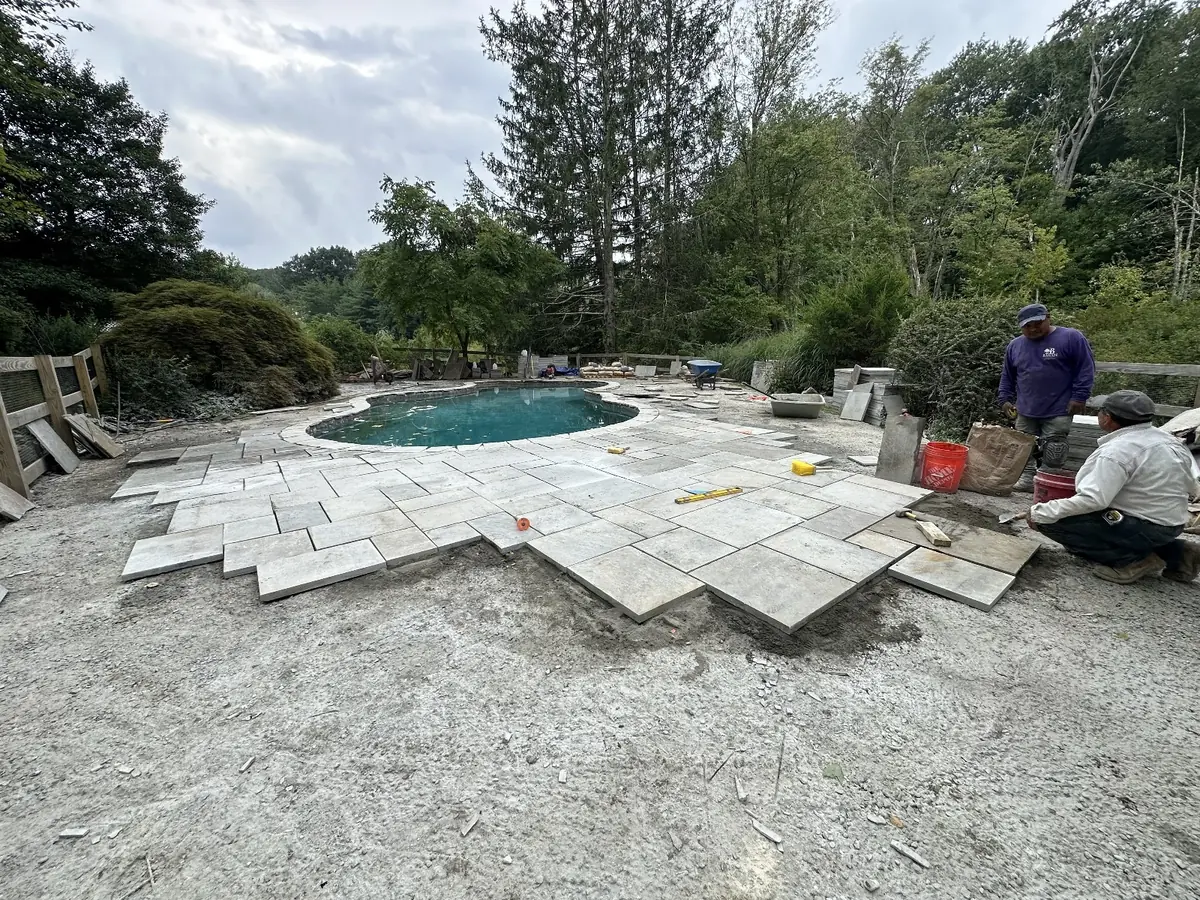
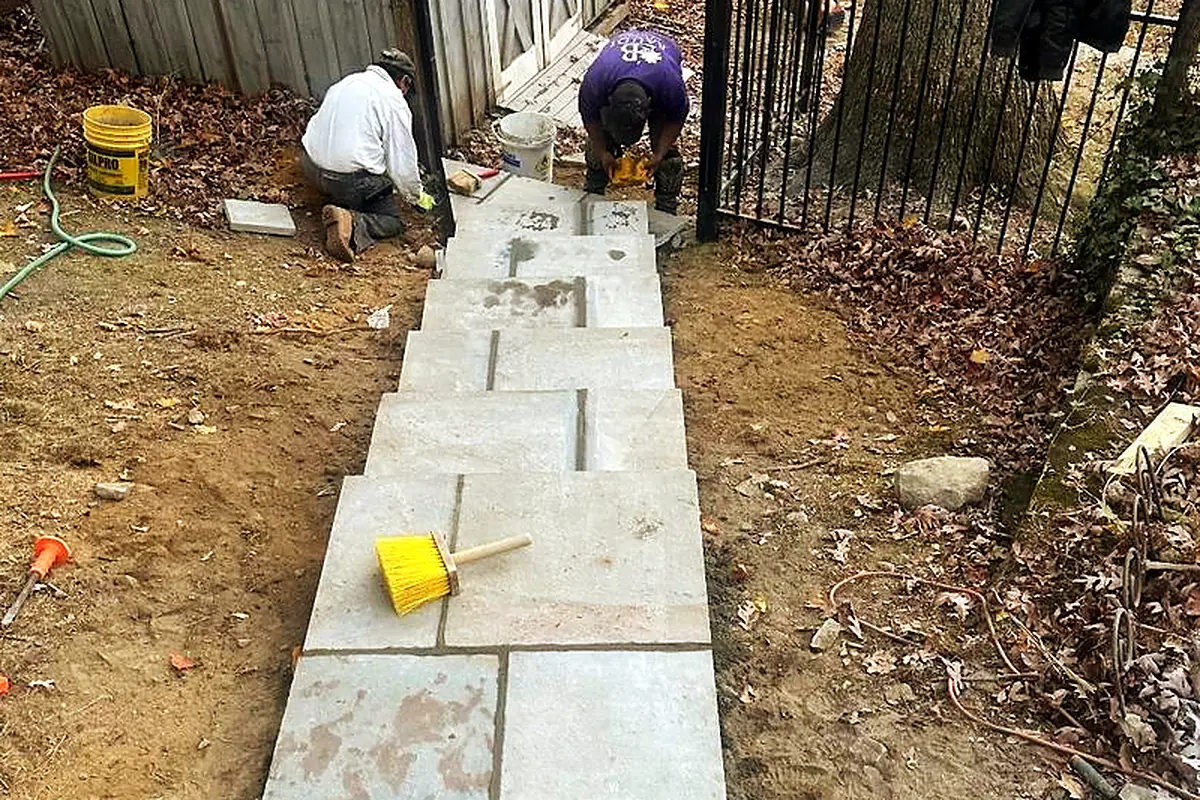
"Paver patio" means units laid dry on a screeded bed over compacted crushed stone, with sand in the joints. Nothing is glued to anything. The surface is thousands of pieces that move a little and forgive a lot.
Natural stone sits on both sides of this line. Bluestone can be mortared to a slab or dry-set on stone dust. So the choice is not stone versus concrete pavers. It is rigid versus flexible, and Westchester's winters have a strong opinion about that.
What freeze-thaw does to each
Ground here freezes, thaws and refreezes all winter. Water in the soil expands as it freezes and moves whatever sits above it.
A rigid surface cannot move without cracking. Done right, with a proper footing-depth slab, expansion control and drainage that keeps water out from underneath, mortared work stays beautiful for decades. Done cheaply, over a thin slab or a wet base, it cracks, and a crack in mortared work telegraphs through the whole surface and cannot be invisibly patched.
A flexible surface moves and comes back. A dry-set patio can heave slightly in January and settle in April with no damage at all, because every joint is a hinge. When a section does settle unevenly, the fix is honest and cheap: lift those units, correct the base, put the same units back.
The trade: mortared work is less forgiving but permanent when built right; dry-set work forgives movement and stays repairable.
Which construction belongs at your house?
Around older Westchester houses, mortared stone matches what the property already has. A 1920s stone house with a poured-and-veneered stoop wants masonry that reads the same way. Raised patios, stone steps into a slope, and anything structural lean mortared, because the concrete core is doing real work.
Dry-set earns its keep on grade. A large patio at lawn level, a pool surround, a walkway across ground that moves: flexible construction takes Westchester winters better per dollar of base work, and full-thickness bluestone dry-set next to an older house still matches the architecture even though the construction method is modern.
Concrete pavers bring pattern choices, crisp modern formats and consistent thickness that makes precise laying faster. On newer builds they can suit the architecture better than natural stone.
| Mortared on concrete | Dry-set on compacted stone | |
|---|---|---|
| Construction | Stone or brick set in mortar over a poured slab | Units laid dry on a screeded bed, sand joints |
| Freeze-thaw | Cannot move without cracking; needs footings and drainage done right | Moves slightly and settles back; every joint is a hinge |
| Failure mode | Cracks that telegraph through the surface | Sections settle out of level |
| Repair path | Repointing; structural failures mean rebuilding | Lift the units, fix the base, re-set the same stone |
| Maintenance | Inspect and repoint joints each spring | Re-sand joints every few years, re-set the odd unit |
| Best fit | Older stone houses, raised patios, steps, structural work | Patios on grade, pool surrounds, walkways |
Every job here starts the same way: a twenty-minute walkthrough and a written price.
Maintenance, honestly stated
Neither surface is maintenance-free, and anyone who says otherwise is selling.
What each asks of you:
- Mortared stone: inspect joints each spring. Repointing small failures early is minor work; letting water into a failed joint through a winter is how surfaces come apart.
- Dry-set stone and pavers: joint sand washes and works out over years. Re-sanding is a homeowner-level job. Expect to re-set the odd unit near downspouts or heavy traffic.
- Both: keep water moving away. Nearly every patio failure we are called to look at started as a drainage problem, not a stone problem.
- Both: skip rock salt on natural stone and concrete pavers. Sand for grip, and if you must use a melt product, choose one labeled safe for stone and pavers.
What actually moves the price
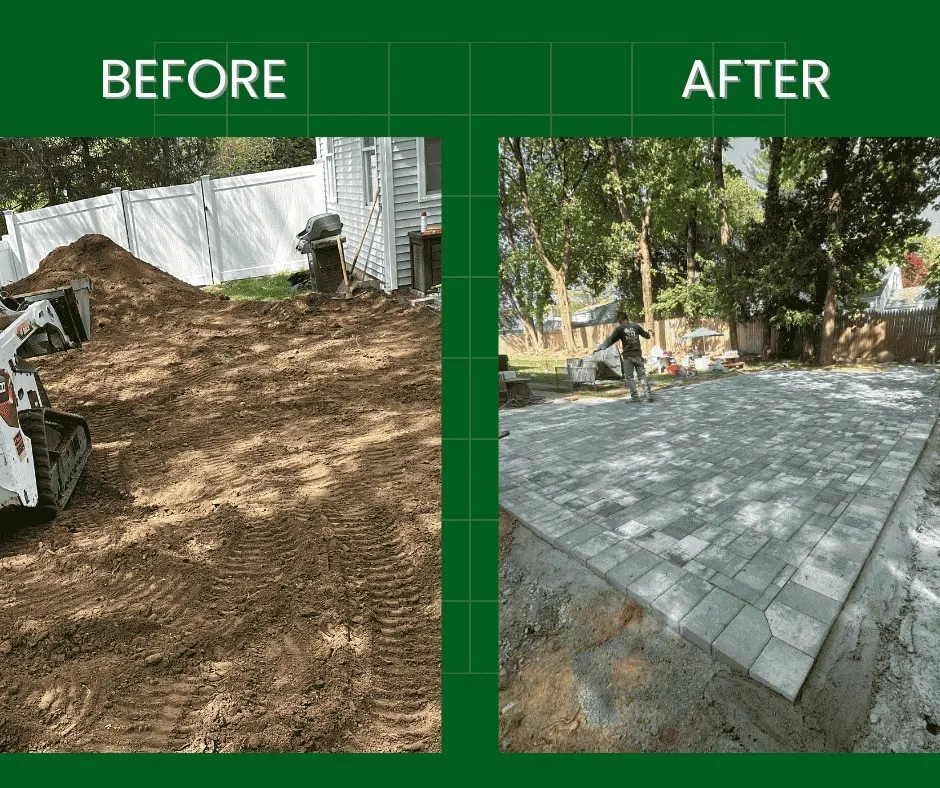
We do not publish numbers because honest ones do not exist without seeing the site. What moves the estimate is mostly under the surface: how much excavation the ground needs, whether a slab and footings are involved, drainage work, access for machines and material, and the stone itself. A small mortared landing can cost more than a large dry-set patio, and the reverse can be true on a different lot. If you want to see what those differences look like in built work, the project gallery shows both constructions on real Westchester lots.
Nelson walks the property, talks through both constructions where both are viable, and leaves a written scope and price for the one he would build on that ground. Water is usually part of that conversation, because drainage decides how long either surface lasts. The walkthrough is free.
Recent work
Common questions
Not here? Call (914) 486-3682. Someone answers seven days a week.
There is no honest number without seeing the ground. Excavation depth, drainage, access for machines, whether a slab and footings are involved, and the stone itself all move it more than square footage does. Nelson prices it on the walkthrough and leaves the number in writing. The visit costs nothing.
Built on a proper base, both outlast the person paying for them. The difference is failure mode: mortared work fails by cracking and is harder to repair invisibly; dry-set work fails by settling and can be lifted and re-set. Base quality decides lifespan far more than the material.
Yes, and we often do. Full-thickness bluestone dry-set on compacted stone dust is a standard construction for us. It pairs the traditional material with the forgiving method.
Not always. If the slab underneath is sound and the cracking is in joints or single stones, repair is realistic. If the slab itself has failed or water is under it, patching the surface is temporary. Nelson will tell you which one you have.
Modern concrete pavers next to 1920s fieldstone can clash, which is an argument for dry-set natural stone there instead. On newer architecture, pavers often look more correct than rustic stone.
The services behind this guide
Both constructions, one crew. Nelson will tell you which he would build on your ground.
Free on-site estimate
Twenty minutes on site, a written price.
Send a few details and we will come out, measure, and leave you with a written price. No fee, no sales visit, no pressure to sign anything that day.
Prefer to talk? Call (914) 486-3682 or text a photo of the area. Open seven days, 7 AM to 7 PM.
- Phone
- (914) 486-3682
- Hours
- Monday to Sunday, 7 AM to 7 PM
Request received.
Nelson or someone on the crew will call you within 24 hours to set up the walkthrough. If it is urgent, call (914) 486-3682 and you will get a person.