

Drainage solutions for Westchester properties
Basement water, wet lawn, mulch washing across a walk. We inspect grades, roof runoff and where water leaves the property before recommending work.
Problems we are often asked to look at
Most calls start with a symptom, not a product name. Water in a basement after heavy rain, a lawn that stays soft for days, ice at the bottom of a driveway, or soil washing down a slope.
Those symptoms can come from surface runoff, roof discharge, compacted soil, or water moving underground. We inspect the site before recommending a fix.
Common complaints and what we check first:
- Basement water after heavy rain: roof runoff, grade toward the house, window wells
- Standing water on the lawn: low spots, compacted soil, blocked outlets
- Mulch or stone washing across walks: concentrated runoff from downspouts or slopes
- Ice sheets on drives in winter: water crossing hardscape with no alternate route
- Erosion on slopes: water moving faster than the ground can absorb it
- Retaining walls bulging or weeping: water trapped behind the face, covered in our retaining wall repair guide
What we check on a walkthrough
Nelson walks uphill of the problem as well as at it. We look at roof gutters and downspouts, surface pitch, where water pools, and whether older buried pipe is still connected to anything.
Some properties we visit have compacted soil, shallow rock, or grades that hold water. Others need only a downspout moved or a strip regraded away from the foundation. We inspect before quoting pipe.
If a retaining wall is leaning or weeping, we look for water trapped behind the face. If mulch washes across a walk after every storm, we trace where runoff is concentrated.
What are the options for fixing yard drainage?
Regrading is often the first option when the ground pitches toward the house. Downspout extensions and swales handle roof water before it reaches beds or basements.
French drains, catch basins, dry wells and daylighted lines are options when water is moving through the soil or a low spot has no natural outlet. The discharge point is planned before any trench is dug.
We will not aim a line at a neighbor's yard. Tying into a town system depends on local rules, and a dry well only works if the surrounding soil will accept water.
Tools we use when the site calls for them:
- Regrading away from foundations and walks
- Downspout extensions, surface or buried
- Swales to carry sheet flow on a chosen route
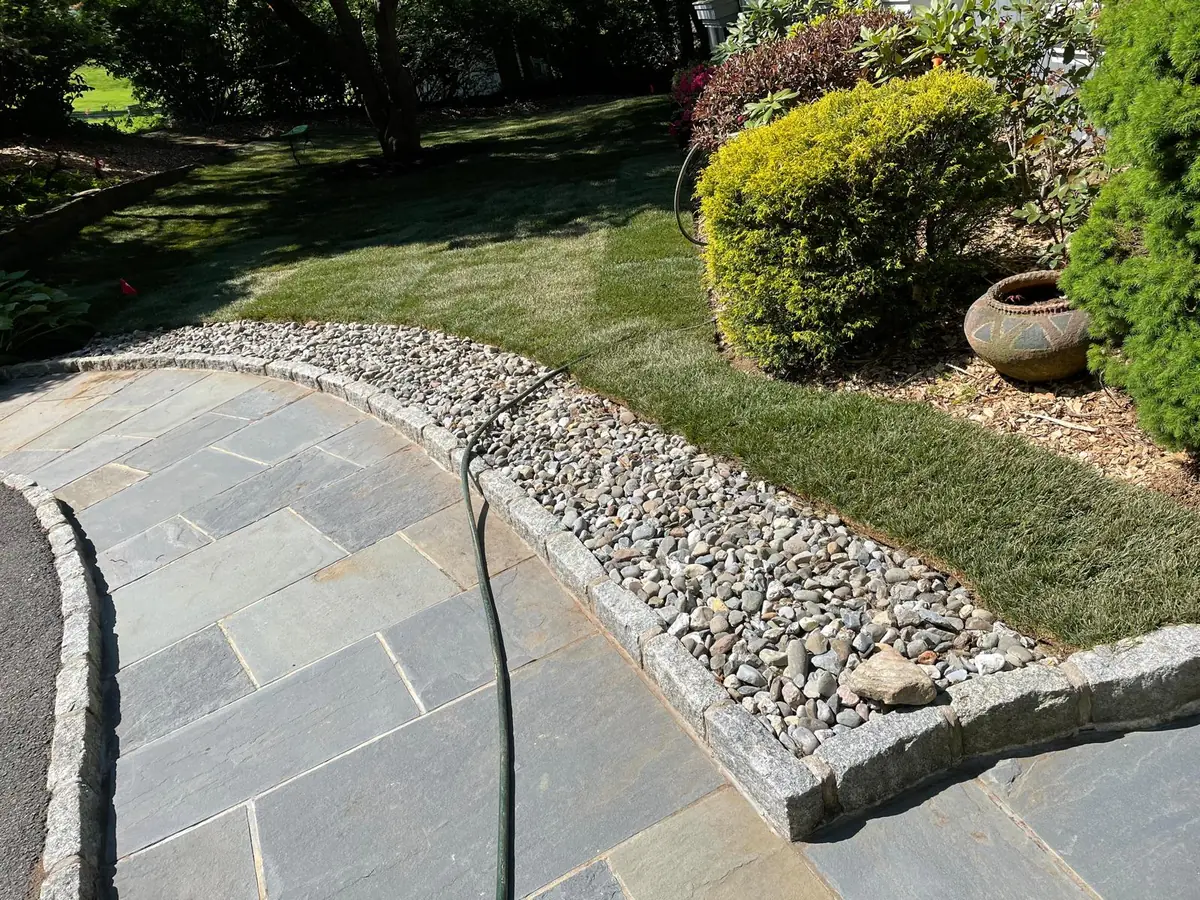
- French drains in washed stone with filter fabric
- Catch basins at low points
- Dry wells where the soil will accept water
- Daylighted solid pipe to a lower outlet
- Erosion control on steep slopes
What affects scope and price
Length and depth of trenching, rock in the dig, access for equipment, how much lawn or hardscape must be restored, and how many collection points are involved all move the number.
Nelson walks the property, writes the scope and leaves a price. The visit is free. Our guide to roof water and drainage covers what to check before winter and why grading usually comes before pipe.
How the estimate works
- 1Tell us what you need
- 2Walk the property with Nelson
- 3Receive a written scope and price
- 4Schedule the work
Common questions
Not here? Call (914) 486-3682. Someone answers seven days a week.
Drainage pricing depends on where the water is coming from and where it can legally and physically go, which is why we diagnose before we quote. Extending downspouts past the beds is a small job. A French drain along a wet side yard is a middle-sized one, and its cost tracks trench length, depth and what the trench runs through, lawn being cheaper than a paved or rooted path. Regrading a low corner, or building a dry well big enough to work in clay soil, is bigger again. The single largest cost variable is the outlet: water needs somewhere real to discharge, and the distance to that point sets much of the price. Nelson walks the property in the wet spots, explains the fix he would build, and leaves a written scope and price. The walkthrough is free.
Maybe, but the honest answer starts with grading, not a product. A French drain is the right tool when water is trapped where the ground cannot shed it, such as a flat side yard between houses or the uphill side of a patio. It is the wrong tool when the actual problem is a downspout dumping at the foundation or a lawn graded toward the house, both of which are cheaper surface fixes. A drain that is installed without fixing grade often silts up and quits within a few seasons, because it was asked to do a grading job. On the walkthrough we watch where the water actually goes, then match the fix to the cause: regrade first, extend the downspouts, and build the drain only where a drain is genuinely what the ground needs.
Our work is on the outside: grade, roof discharge and surface routes. That resolves many wet basements. If water still comes through a wall under pressure after exterior fixes, interior waterproofing is a different trade and we will say so.
Related work we do
Most properties need more than one of these. One call covers all of them.
What clients say
I've used Baudi for lawn care, masonry, landscaping and snow removal and do not have a single negative to report. Highly recommend Nelson and his team.
Always taking good care of everything and doing the best job. Attentive, and answers all my questions.
Twenty minutes on site, a written price.
Send a few details and we will come out, measure, and leave you with a written price. No fee, no sales visit, no pressure to sign anything that day.
Prefer to talk? Call (914) 486-3682 or text a photo of the area. Open seven days, 7 AM to 7 PM.
- Phone
- (914) 486-3682
- Hours
- Monday to Sunday, 7 AM to 7 PM
Request received.
Nelson or someone on the crew will call you within 24 hours to set up the walkthrough. If it is urgent, call (914) 486-3682 and you will get a person.