

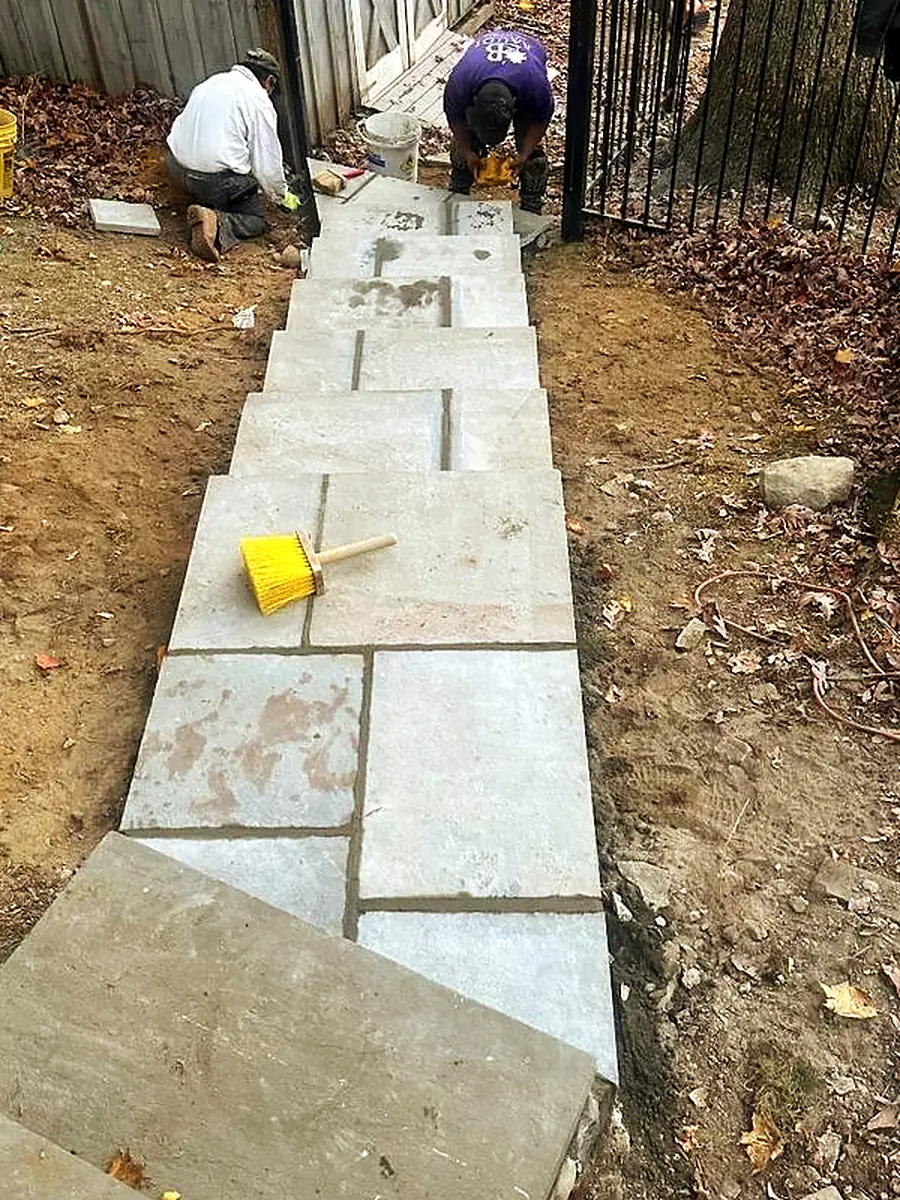
Power washing a Westchester home without wrecking it
Most of what people call power washing should be done at garden-hose pressure with the right detergent. The machine is the least important part of the job. Here is how to think about the green film on the north side of your house.
By Nelson Bautista, Baudi Landscaping · Updated
At a glance
- Siding, roofs and painted wood are soft-wash jobs: low pressure plus the right detergent.
- Real pressure belongs only on concrete, stone and pavers, and even there technique matters.
- Never pressure-wash asphalt shingles. The granules coming off are the roof.
- Wash after the pollen finishes, roughly late May, or you pay for the same clean twice.
- A washed paver patio needs its joint sand replaced afterward, not forgotten.
What is actually growing on your house
The green haze that creeps up siding here is mostly algae, and it is a shade-and-moisture problem. That is why it owns the north face of the house, the side under the trees, and any wall near a downspout. Humid summers feed it; tree cover keeps it wet.
The black streaks on roofs are a different organism, black spots on siding near beds are often artillery fungus firing from wood mulch, and the gray film on decks and stone is a mix of algae, pollen and plain grime. They respond to different treatments, which is the first reason blasting everything at maximum pressure is the wrong model.
None of this is only cosmetic. Algae holds moisture against the surface, painted wood peels sooner, and a slick film on stone or a deck is a genuine slip hazard by the first cool morning.
Pressure is for stone. Almost everything else wants chemistry.
A pressure washer concentrates enough force to cut soft wood, chase water up behind vinyl laps, and blow the sand out of every joint in a patio. The professional distinction is between pressure washing and soft washing: low pressure with a detergent that kills the growth, then a rinse.
Siding, roofs and painted surfaces are soft-wash jobs, full stop. Shingle roofs should never see high pressure; it strips the granules that are the roof's actual weather surface. Wood decks want low pressure and a fan tip, because high pressure leaves furry, splintered grain that then needs sanding.
Real pressure belongs on hard mineral surfaces: concrete, bluestone, granite, pavers. Even there, technique matters. A wand held too close cuts wandering lines into concrete that never come out, and a pressure pass over a dry-set patio blows out joint sand that has to be replaced afterward, not forgotten.
When should a Westchester house be washed?
Spring, after the pollen dump. Washing a house in the yellow weeks is washing it twice. Late May and June, once the oaks and pines have finished, is when the spring wash actually holds.
Before any painting or staining. Coatings fail early over dirt and algae, so a wash belongs a few dry days ahead of every exterior paint or stain job.
Fall, for the surfaces winter will make dangerous. Walks, steps and the driveway go into winter cleaner and less slick, and the deck sheds the film that would otherwise feed under snow all winter.
Overflowing gutters streak siding and feed the algae line under the roof edge, so gutter cleaning and washing are usually the same fall conversation here.
Every job here starts the same way: a twenty-minute walkthrough and a written price.
What is sensible to do yourself
A rented machine and a Saturday are a fine match for a flat driveway, a walkway or a patio, if the joints are mortared or you are prepared to re-sand dry-set joints afterward.
Where we would rather you called someone, us or anyone competent:
- Anything off a ladder. A pressure wand's recoil on a ladder is how these injuries happen.
- Second-story siding and roofs. Soft-wash chemistry, controlled rinsing and fall protection are the job, not reach.
- Old brick and stone with lime mortar. Pressure excavates soft joints, and repointing costs far more than washing.
- Painted pre-1978 surfaces. Blasting old paint means containing lead debris, not spreading it across the beds.
- Anything above or beside plantings you care about. Pre-wetting the beds and managing runoff take practice to get right.
What moves the price
We quote washing after seeing the property, not by the square foot over the phone. Height and access move the number most, then surface types, how established the growth is, and how much protecting the plantings and pre-treating will take. It is often bundled with gutter cleaning or a fall cleanup, which shares the setup and saves a trip.
Call (914) 486-3682 or send photos of the surfaces through the estimate form. Washing quotes are usually straightforward from good photos.
Common questions
Not here? Call (914) 486-3682. Someone answers seven days a week.
We quote it after seeing the property or good photos of it. Height and access move the number most, then surface types and how established the growth is. Bundling it with gutter cleaning or a fall visit shares the setup and usually saves money. No figures sight unseen, and the estimate is free.
High pressure can, by forcing water up behind the laps and into the wall. Siding should be soft washed: detergent at low pressure, then rinsed downward. Done that way it is safe and lasts most of a year or more.
Shaded, tree-covered properties often need the north face done annually. Open, sunny houses can go two or three years. The house tells you: when the green film returns, it is time.
No one should. Asphalt shingles lose their granule surface under pressure. Roof staining is treated with a soft-wash application and rinse, or left alone if access and plantings make treatment risky.
A pressure pass takes some joint sand with it, which is fine if the job includes re-sanding and is a slow problem if it never does. Ask whoever washes it what goes back in the joints afterward.
During peak pollen, roughly late April into May, and in freezing weather. Let the oaks finish before booking the spring wash.
The services behind this guide
Washing, gutters and seasonal work share a truck. One call covers them.
Twenty minutes on site, a written price.
Send a few details and we will come out, measure, and leave you with a written price. No fee, no sales visit, no pressure to sign anything that day.
Prefer to talk? Call (914) 486-3682 or text a photo of the area. Open seven days, 7 AM to 7 PM.
- Phone
- (914) 486-3682
- Hours
- Monday to Sunday, 7 AM to 7 PM
Request received.
Nelson or someone on the crew will call you within 24 hours to set up the walkthrough. If it is urgent, call (914) 486-3682 and you will get a person.