

Spring in a Westchester yard: what to do and when to do it
Spring here is short and it stacks up. This is the order we actually work in from March to Memorial Day, and the jobs that go wrong when they are rushed.
By Nelson Bautista, Baudi Landscaping · Updated
At a glance
- Work the lawn only after the footprint test passes: if your boot print stays, wait.
- Forsythia in full bloom means the pre-emergent window is open and closing.
- Mulch after the soil warms: two to three inches, pulled back off every trunk and stem.
- Seed small repairs in April; hold big lawn renovations for early fall. Sod works now.
- Walk every wall, step and walk edge for winter movement before it becomes a summer repair.
Start with what winter did
A Westchester winter works on a yard three ways. Freeze-thaw moves things: stones heave, walk edges lift, wall faces open a joint. Plows and salt burn the lawn along the road and the driveway. And months of snow load flatten turf and snap the weak wood out of trees and shrubs.
So the first spring job is a slow walk, not a rake. Check the lawn edges along pavement for salt burn. Look for matted gray patches of snow mold where drifts sat. Look at every wall, step and walkway edge and ask whether it moved over the winter. A stone that lifted half an inch is a spring reset; the same stone ignored becomes a summer trip hazard and a fall repair.
March: restraint
The biggest March mistake in this county is working soil that is still saturated. Step on the lawn: if the footprint stays, every pass with a mower or wheelbarrow is compacting soil and tearing turf that cannot recover yet.
What March is actually for: cutting back the perennials left standing over winter, pruning out winter-killed wood, picking up branch drop, and planning. Summer-blooming shrubs can be pruned now; spring bloomers like forsythia and lilac get pruned after they flower or you are cutting the flowers off.
March is also when the season books. By the time the ground is workable, spring schedules across the county are largely spoken for.
April: the working month
Once the footprint test passes, the real cleanup runs: beds cleared, edges recut, the first mow. Take that first cut a notch lower than summer height to clear the winter mat, then bring the deck back up.
Timing pre-emergent weed control is a soil thermometer job, not a calendar job. Crabgrass germinates as soil holds the low 50s. The county's forsythia is the folk indicator, and it is roughly right: full bloom means the window is open and closing.
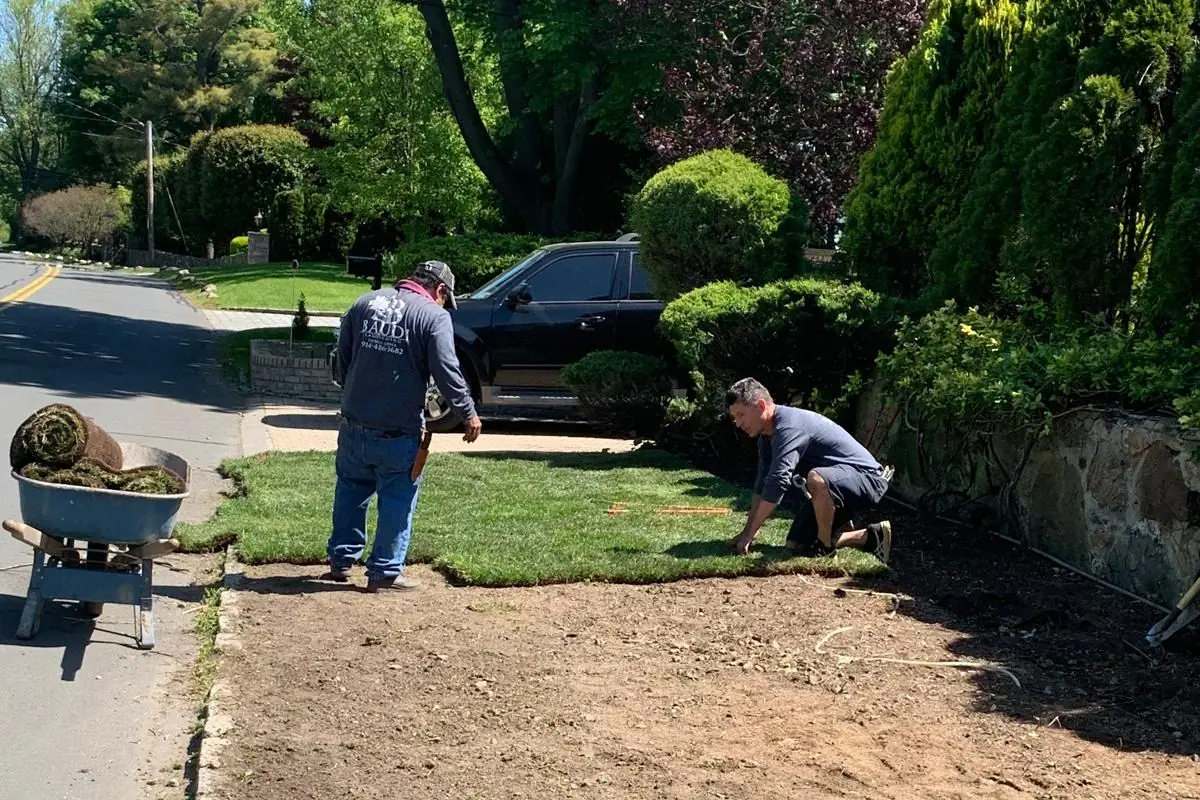
April is also the month to fix the lawn's winter damage. Salt-burned road edges and plow gouges get topsoil and seed while the soil is cool and wet. Where a whole area failed, this is the fork: seed now and protect it from crabgrass season with committed watering, or hold larger renovations for early fall when nothing fights the new grass. Sod escapes the timing argument, which is why our sod work runs hard in spring.
Every job here starts the same way: a twenty-minute walkthrough and a written price.
May: planting and mulch
Frost risk in northern Westchester runs to about mid-May, and the nurseries know it. Trees, shrubs and hardy perennials can go in earlier; tender annuals and vegetables wait for the soil to warm regardless of one warm week in April.
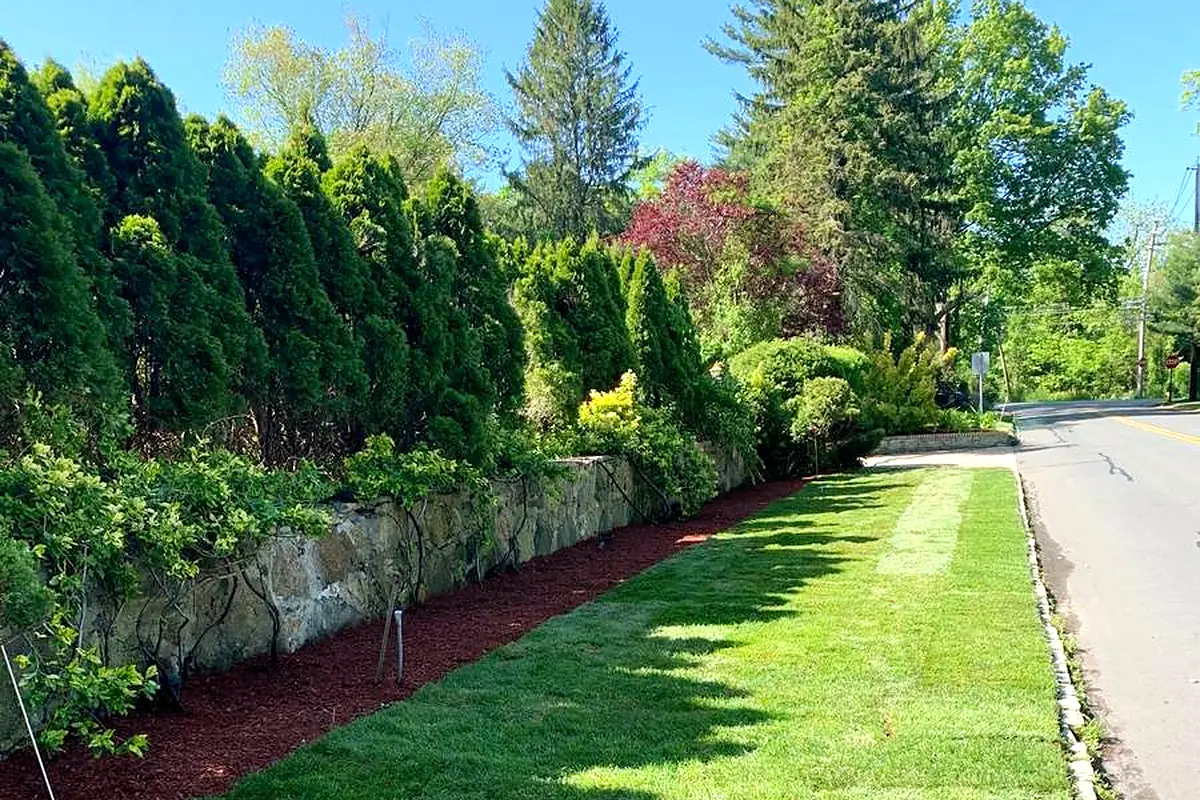
Mulch goes down after the soil has warmed, not before. Two to three inches, pulled back off trunks and stems. The mulch volcano piled against a tree trunk is the county's most reliably repeated mistake and it rots bark, invites rodents and kills trees slowly.
Plant with the deer in mind. North of the parkways especially, unprotected hostas and arborvitae at the woods line are a browse buffet. There are plants that hold and plants that need protecting, and any honest planting plan says which is which.
What should you watch for while the ground is wet?
Melt season is the one time of year you can watch where water actually goes on a property. The fixes live on our drainage page; the watching costs nothing.
What to watch for while everything is wet:
- Standing water that outstays the rain by days. That is grade or soil, and both can be worked with.
- Mulch fanned across a walk after a storm. Water has picked a route and will keep using it.
- A downspout dumping at the foundation. The cheapest drainage fix on the property.
- A wall weeping mid-face or bellying. Water is trapped behind it, and this is the season to see it.
- Gutters overflowing in the first spring rains, feeding all of the above.
Recent work
Common questions
Not here? Call (914) 486-3682. Someone answers seven days a week.
When the soil passes the footprint test, usually late March into April depending on the year and how much shade the property holds. Working a saturated lawn does more harm than waiting two weeks.
Once soil temperatures sit in the mid-50s and crabgrass has germinated, pre-emergent products no longer help. In this county that window usually closes in later April. Forsythia in full bloom means act now.
Small repairs seed fine in April with steady watering. Large renovations by seed fight crabgrass and summer heat, which is why fall is their season. Sod works in spring because it arrives already grown.
More than three inches, or any amount piled against trunks and stems. Two to three inches after the soil warms, pulled back from the base of every plant.
Movement itself is information, not yet an emergency. A lifted walk stone is a simple reset. A wall that leans or weeps needs looking at before another winter loads it. Send a photo and we will tell you which category you are in.
The services behind this guide
One crew for the lawn, the beds and the stone. Start with a free walkthrough.
Free on-site estimate
Twenty minutes on site, a written price.
Send a few details and we will come out, measure, and leave you with a written price. No fee, no sales visit, no pressure to sign anything that day.
Prefer to talk? Call (914) 486-3682 or text a photo of the area. Open seven days, 7 AM to 7 PM.
- Phone
- (914) 486-3682
- Hours
- Monday to Sunday, 7 AM to 7 PM
Request received.
Nelson or someone on the crew will call you within 24 hours to set up the walkthrough. If it is urgent, call (914) 486-3682 and you will get a person.