

Where the roof water actually goes
Most of the wet basements we get called about in Westchester are not plumbing failures and not foundation cracks. They are a roof, a downspout, and six feet of ground doing exactly what they were built to do, in the wrong direction. A single storm can put a few thousand gallons off an average roof, and every drop of it lands within a few feet of the house unless something carries it away.
By Nelson Bautista, Baudi Landscaping · Updated
At a glance
- A clear gutter that discharges at the foundation has only moved the problem six feet. Where the water lands is the part that matters.
- Fall is the season this fails. Leaves pack the gutter, the ground is already saturated, and the first freeze traps whatever is sitting there.
- Grade beats pipe. Six inches of fall in the first ten feet from the house solves more basements than any drain we install.
- Splash blocks move water about two feet. That is rarely far enough on a house with any slope toward it.
- A downspout tied into an old buried line nobody has ever snaked is a common and invisible failure.
Roof water in Westchester starts as a gutter problem and ends as a grading problem
The gutter is the part people look at, because it is the part they can see from the driveway. It is also the easiest part to fix. What decides whether water reaches the basement is the twenty feet after the downspout elbow, and almost nobody looks at that.
Walk it during rain if you can. That is the single most useful thing a homeowner can do, and it takes four minutes. You are looking for water leaving the downspout and then turning back toward the house, pooling against the foundation, or disappearing into a low spot that stays wet for days. A dry-day inspection misses most of this, because the ground tells you very little when it is not being asked to do anything.
What fall does to a system that worked all summer
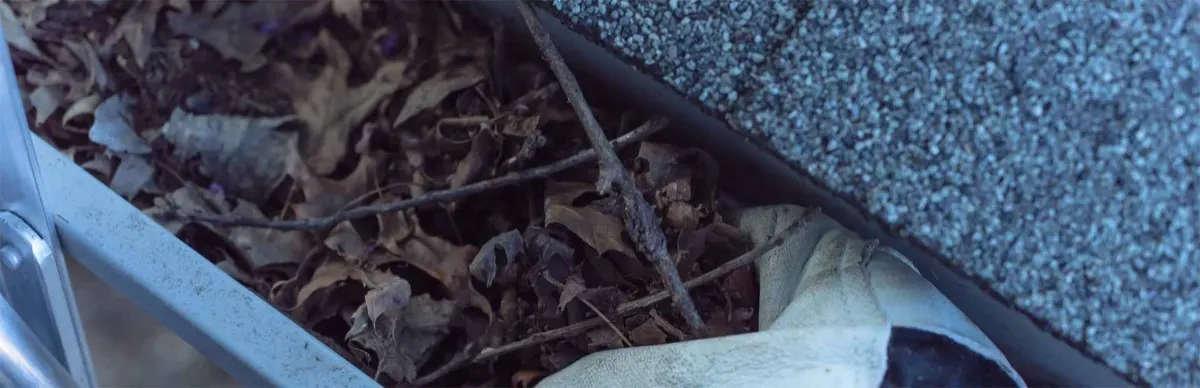
Leaves are the obvious half. A gutter packs, water sheets over the front edge, and lands in a concentrated line right at the foundation instead of being carried to the end of the run. On a house with mature oaks this can happen twice in a season, which is why one cleaning in November is often one cleaning too few.
The half people miss is that the ground has changed. Late fall soil in Westchester is already holding water, so it absorbs far less than the same soil did in July. Water that used to soak away now sits. Then the first hard freeze locks the surface, and everything that arrives after that has nowhere to go but sideways, which usually means toward the lowest point on the property. Often that is a basement window well or a bulkhead.
Grade first, then pipe
The order matters and it is the thing most often done backwards. A buried drain line is satisfying to install and it photographs well, but if the ground still slopes toward the house, that pipe is now handling water that should never have been near the foundation at all. It will handle it until the day it clogs.
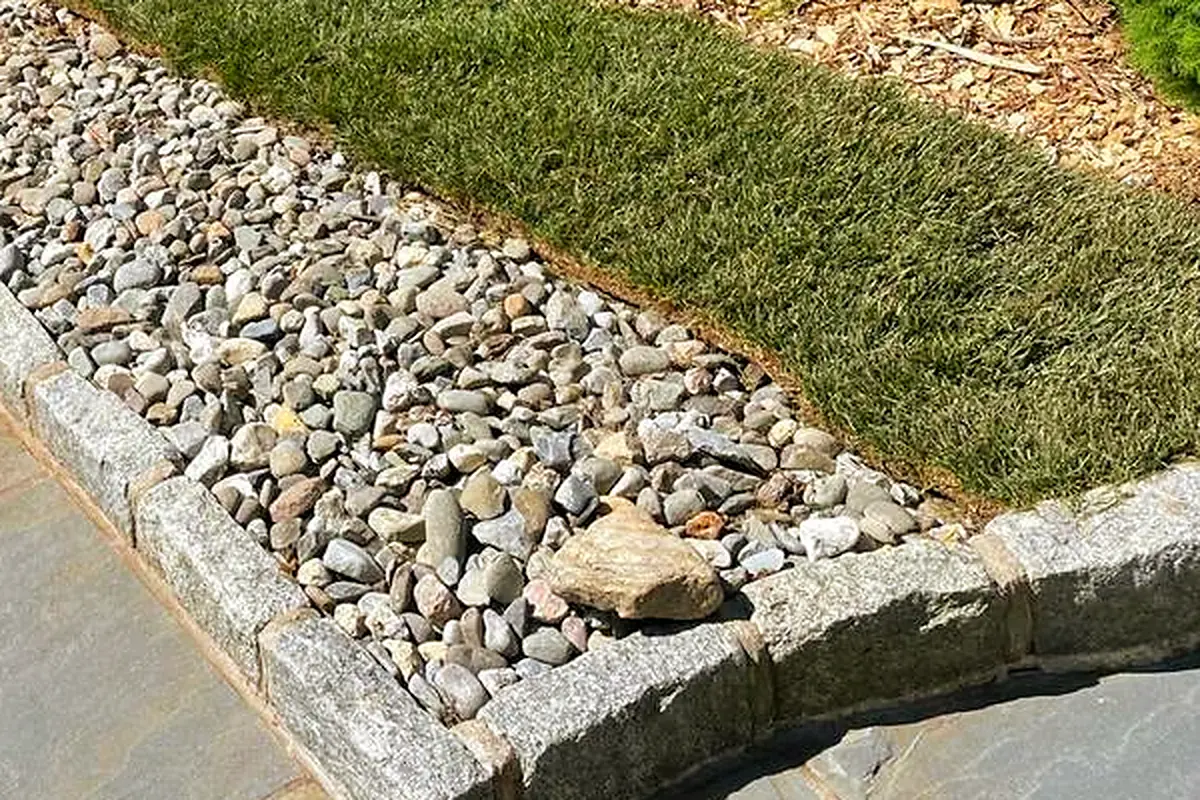
The standard we work to is roughly six inches of fall in the first ten feet out from the wall. Getting there is sometimes soil work and nothing more: building up a settled bed, correcting a patio that was set flat, or cutting a shallow swale that moves water around the corner of the house rather than under it.
Pipe earns its place when grade alone cannot do the job. A walkout with nowhere to shed, a property that slopes in from a neighbour, a driveway that collects and delivers everything to one corner. Then a proper line with adequate fall and a real outlet is the answer, and it is worth doing properly, because a drain that outlets into a low spot in your own yard has just relocated the puddle.
The five things worth checking before winter
Gutters clear and pitched, after the leaves are actually down rather than while they are still falling. Downspouts discharging at least six to ten feet out, not two. Extensions still attached, because they get knocked off by mowers and forgotten. Any buried line flowing freely, which you can check by running a hose into the top and watching for it at the outlet. And the ground within ten feet of the foundation sloping away rather than toward.
That last one changes over the years without anyone noticing. Backfill settles, beds get topped up with mulch season after season until the bed is higher than the lawn, and a patio installed dead level thirty years ago is now pitched slightly the wrong way. None of it happens fast enough to see.
Giving the water somewhere to go
Common questions
If yours is not here, call (914) 486-3682. Someone answers seven days a week.
Six to ten feet is the working range, further on a property that slopes toward the house. Two feet, which is roughly what a splash block gives you, is rarely enough. The test is not the distance, it is whether the water keeps moving once it lands.
Often not. Correcting the grade in the first ten feet and getting roof water properly away from the foundation solves a large share of wet basements on its own. A drain is the right answer when grade cannot be corrected, not the first thing to reach for.
Once the leaves are genuinely down, which locally is usually mid to late November, and a second time earlier in the fall if the property has mature oaks or maples close to the roof. A single early cleaning tends to leave a full gutter going into winter.
Grading and swale work can continue until the ground freezes hard. Once it does, the soil cannot be shaped or compacted properly and the work is better held until spring. That is a real cutoff rather than a scheduling preference.
The services behind this guide
Roof water, grading and gutters are one system, and we handle them as one.
Free on-site estimate
Twenty minutes on site, a written price.
Send a few details and we will come out, measure, and leave you with a written price. No fee, no sales visit, no pressure to sign anything that day.
Prefer to talk? Call (914) 486-3682 or text a photo of the area. Open seven days, 7 AM – 7 PM.
- Phone
- (914) 486-3682
- Hours
- Monday to Sunday, 7 AM – 7 PM
Request received.
Nelson or someone on the crew will call you within 24 hours to set up the walkthrough. If it is urgent, call (914) 486-3682 and you will get a person.